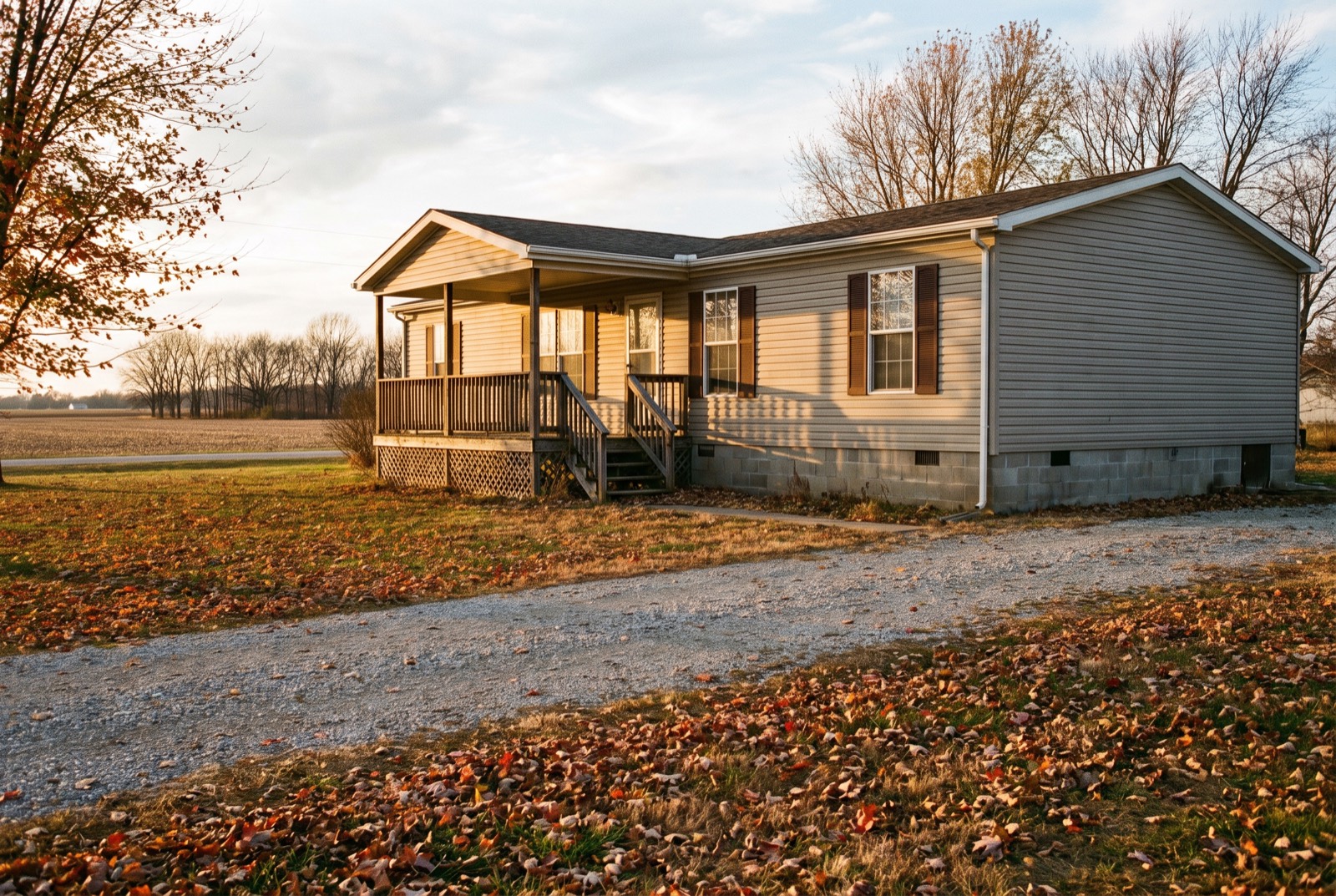
A specialty practice and an open federal-reference resource for loan officers, processors, and underwriters working FHA-MH pipelines. Built around the six structural findings of HUD Handbook 4000.1 § II.D.4.b and the permanent-foundation criteria of HUD PFGMH § 3. 98% first-submission approval rate.
Most of what loan officers, processors, and underwriters need to know about the FHA structural-certification requirement for a manufactured-home loan is buried inside HUD Handbook 4000.1, with cross-references to the Permanent Foundations Guide, the Single Family Housing Policy Handbook, and a handful of HOC-specific procedural memos. This site collects, organizes, and explains what's actually required — handbook citations included.
HUD 4000.1 § II.D.4.b lists six structural items a Professional Engineer must address for an FHA-insured manufactured-home loan. Most underwriters work through them as a checklist; most denials trace to one of these six being incompletely documented.
| № | Finding | Reference | Common failure point |
|---|---|---|---|
| F1 | Foundation per PFGMH § 3 Piers, footings, anchoring, soil bearing |
PFGMH § 3 | Insufficient pier count or pier-to-frame contact |
| F2 | Utilities & services Electric, water, sewer, gas, HVAC permanence |
II.D.4.b.ii | Temporary connections, exposed flex, no service entrance |
| F3 | HUD data plate Interior label — serial, manufacturer, design loads |
24 CFR § 3280.5 | Missing, illegible, or painted over; LOPV needed |
| F4 | HUD certification label Exterior red label, one per transportable section |
24 CFR § 3280.8 | Missing on one or more sections; IBTS process |
| F5 | Site work Grading, drainage, skirting, vapor barrier, access |
II.D.4.b.v | Drainage toward unit, incomplete skirting, torn vapor barrier |
| F6 | Towing equipment Removal of axles, wheels, tires, hitch |
PFGMH § 3.5 | Running gear still attached or visible on site |
For each finding's full handbook citation, narrative requirements, and resolution guidance for failed conditions, see the deep reference on HUD 4000.1 § II.D.4.b.
A manufactured home is delivered to a site on its own running gear. "Permanent foundation" is the term of art for the engineering condition that converts it from chattel to real property — and triggers FHA's willingness to insure a long-term mortgage against it.
"A permanent foundation shall be constructed of durable materials; i.e. concrete, mortared masonry, or treated wood — and be site-built. It shall have attachment points to anchor and stabilize the manufactured home to transfer all loads, defined herein, to the underlying soil or rock."
The PFGMH then specifies pier types, footing dimensions, ground anchors, perimeter enclosure, ventilation, and the removal of the running gear. All six FHA findings refer back to the conditions PFGMH § 3 establishes.
The practical implication: a manufactured home set on temporary jack stands, sitting on its tires, or anchored only to the ground with no perimeter masonry is not on a permanent foundation in HUD's sense — regardless of how long it's been there. The PFGMH-§-3 conditions are what the PE certifies against. Full deep reference on PFGMH § 3 here, including pier-spacing tables and common remediations.
From processors and loan officers. Full categorized FAQ on the FAQ page — the five below are the most repeated.
FHA requires a PE. HUD Handbook 4000.1 § II.D.4.b is specific: the structural certification on an FHA-insured manufactured-home loan must come from a "registered professional engineer or architect" who is licensed in the state where the property is located. A generalist home inspection report — even one performed by an ASHI-certified inspector — does not satisfy this requirement.
The reason isn't the field work; it's the professional liability framework. A PE accepts responsibility for the determination under their license; the E&O policy backs that. A home inspector's general-liability policy doesn't carry the same accountability for an engineering opinion.
Reference: HUD 4000.1 § II.D.4.b — "structural integrity verified by a State-licensed engineer or architect"PFGMH is the Permanent Foundations Guide for Manufactured Housing, a HUD engineering reference document (last major revision 1996, with subsequent technical bulletins). Section 3 covers the actual structural requirements: pier specifications, footings, soil bearing assumptions, anchoring systems, skirting, vapor barriers, and the removal of running gear.
Your underwriter is citing it because HUD 4000.1's first structural finding (F1) says the foundation must meet "the requirements of the Permanent Foundations Guide for Manufactured Housing." The handbook delegates the engineering criteria back to PFGMH § 3. So when the underwriter asks "does this meet PFGMH § 3?" — that's the F1 question, asked formally.
Reference: HUD 4000.1 § II.D.4.b.i → PFGMH § 3 (full text available from HUD User)It's a recoverable condition; it adds work and time. The HUD data plate is the interior label (usually inside the master bedroom closet, kitchen cabinet, or electrical panel) showing the unit's serial number, manufacturer, model, date of manufacture, and design loads. FHA requires it.
If it's been painted over, removed, or never installed, the typical resolution path is a Letter of Plate Verification (LOPV) sourced from the original manufacturer (or successor entity) — this re-issues the data-plate content based on factory build records. We can identify the manufacturer from other evidence (exterior cert label, frame markings, build sticker), make the LOPV request, and document the result. This usually adds 1–3 weeks to the timeline depending on the manufacturer's responsiveness.
Reference: 24 CFR § 3280.5; HUD 4000.1 § II.D.4.b.iii; deep reference on data plates and labelsNo. The HUD Manufactured Home Construction and Safety Standards (the HUD Code) took effect June 15, 1976. Homes manufactured before that date are technically "mobile homes" rather than "manufactured homes" in HUD's terminology, and they're categorically ineligible for FHA insurance regardless of structural condition.
There's no PE certification that solves this; it's a categorical eligibility rule. Pre-1976 units can still be financed through cash purchase, owner financing, or some specialty insurance products — but not FHA, conventional, USDA RD, or VA. If your borrower is set on the property, you'll need to redirect their financing path.
Reference: HUD 4000.1 § II.D.4.b — manufactured housing eligibility; 24 CFR § 3280Standard SLA is acknowledgment within one business day, written quote same business day, field-visit window confirmed within 24 hours, sealed PDF in 24 hours from field visit. For a nine-day window that's well inside the standard path.
For an urgent closing, send the report requirement, address, and deadline. We will confirm whether expedited scheduling is available before you book.
Call (573) 275-7647 directly for active-deal rushes — the form is fine for everything else.
Reference: Written quote and service scope; pipeline processThe full FAQ page has 30+ questions across seven categories.
Scapular Engineering, P.E. — primary licensure Missouri (P.E. since 2019). Reciprocal licensure Arkansas, Illinois, Kansas, Iowa, Nebraska, and Indiana. The same engineer signs every report in every state. No subcontracting, no franchise model, no per-state shell firms.
Our working trade has been residential structural inspection since 2018, with a primary focus on manufactured-housing FHA certification. 5,000+ FHA-insured manufactured-home reports across seven states, with a 98% first-submission approval rate.
The practice carries $2M aggregate / $1M per-claim Errors & Omissions liability through an A+ rated carrier. Policy details available on request to underwriters and compliance reviewers. See the engineer-of-record page for credentials, education, and the seven-state license set.
Drop the property address, FHA case number, and timeline. Acknowledgment within one business day. Written quote same business day. Field visit confirmed within 24 hours. PE-sealed PDF in your underwriter's file in 24 hours from field visit.
FHA structural reports here; manufactured-home inspections, affixation documents, and aluminum wiring certifications through the rest of the firm. One engineer of record, licensed in seven states.
Visit the firmA new conventional financing path may require a post-move structural integrity inspection.
Get the moved-home structural integrity report →